
Evaluating New York City’s Sustainability Initiatives in Addressing Environmental Injustice
Written by DeAundr’e Newsome (dmn2147), Durga Sreenivasan (dms2344), Nur Syairah Husna Mohd Ridzuan (nm3555), Shixun Shangguan (ss7265)
PS4734 Practicum on Practical Applications of Environmental Research - Group Research Final Paper - Fall 2024
Advised by Louise A. Rosen, Maya Lugo, and Tal Henig-Hadar
1. Summary
This paper analyzes the approach taken by the New York City government to tackle environmental justice (EJ) issues, particularly those impacting disadvantaged communities in Harlem related to affordable housing, climate change, and access to resources. The paper provides historical context for EJ issues and employs quantitative data analysis to examine specific metrics, such as PM2.5 levels and housing maintenance needs, highlighting how systemic factors like colonial legacies, urban development policies, and redlining, perpetuate environmental injustice. It evaluates the various strategic plans instituted by the New York City government to address these concerns, assessing their effectiveness and impact. By employing a mixed-methods approach, the study emphasizes qualitative analysis of existing policies and their implementation, drawing insights from a comprehensive literature review that includes city publications, peer-reviewed research, and news articles. This paper compares EJ efforts from other US cities such as San Francisco, Chicago, and Philadelphia, and highlights e community-centric strategies that could benefit New York City. These findings demonstrate the need to bolster robust community engagement measures into EJ initiatives tailored to the specific challenges faced by neighborhoods like Harlem. A significant limitation identified in this research is the lack of data measuring the impact and outcomes of EJ initiatives at the community level across many U.S. cities. The paper recommends establishing robust data collection and impact assessment mechanisms to evaluate the effectiveness of these initiatives, thereby reinforcing the call for a community-focused approach in their implementation.
2. Overview of environmental justice
Environmental justice is a principle rooted in the belief that all people, regardless of race, income, age, national origin, and disability status, have a right to live, work, and play in communities that are safe, healthy, and free of harmful environmental conditions.[1]Its emergence comes from the co-production of environmentalism and the civil rights movement in the 1960s.[2] During the Progressive Era in the early 20th century, scientists, urban reformers, and grassroots organizations called for stricter regulation over industrialization as it became the driving force of economic development.[3]However, the absence of regulatory oversight led to significant negative externalities, such as depleted natural resources and public health crises in overcrowded urban areas where raw sewage polluted waterways and contaminated the air. As cities expanded and metropolitan areas developed, the New Deal introduced the first civilian public housing programs, which disproportionately displaced Black communities and people of color into isolated regions of urban areas.[4]The Civil Rights Act of 1964 later prohibited discrimination based on race, color, religion, sex, or national origin. Despite these legislative advancements, the struggle for reform persisted as the challenges facing communities continued to grow. The isolation of certain racial and socioeconomic groups rendered them vulnerable, making them unwitting "martyrs" to economic development while bearing the brunt of environmental degradation. While research shows that the United States has numerous case studies of strategic martyrdom through environmental issues, this research sets out to analyze the environmental justice challenges faced by Harlem, New York, City, and the analysis of their progression along with NYC’s targeted policies implemented by the city government.[5][6][7][8]
3. Environmental justice in New York City
New York City’s history of environmental injustice serves as a case study that reveals persistent patterns of redlining, urban renewal, and other challenges faced by disadvantaged communities until present day.[9] New York City’s environmental justice history dates to the colonization by the Dutch in the early 1620s. In 1624, when the Dutch arrived in America to establish the colony of New Amsterdam (present-day New York State and New Jersey), they encountered the established civilization of the Lenape people on the land known as Lenapehoking. The Dutch forcefully gained possession of the Lenapehoking area by driving out Lenape people, securing it with a wall to prevent their entry, and slowly began to seize more land through killing and pillaging (this tactic was also seen in other cities in the United States during the practice of redlining).[10] The Dutch weakened the entire Lenape community through destroying the environment, employing methods such as clear-cutting forests, overfishing, overgrazing, and releasing polluted matters into marshes, streams, and other water sources.[11]It suggests the identity of colonization in New York City to be inseparable from environmental injustice, and established the precedent for ongoing effects of colonialism across the state. As this identity and practice began to grow overtime, it severely impacted communities in disproportionate ways, Harlem being one of those communities. Since the early 20th century, Harlem has remained a majority African-American community, making up at least 45% to 90% throughout the period. Several analyses were conducted on selected metrics that represent such disparities to illustrate the environmental justice issues that exist in Harlem (e.g. PM2.5 levels, trash bin density, tree canopy coverage, and housing maintenance needs) based on data between 2017 and 2023.
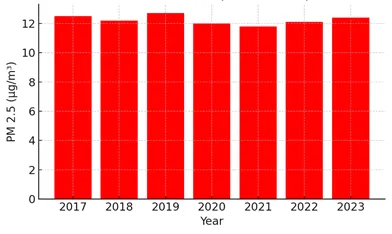
A longitudinal analysis of PM 2.5 in New York City from 2017 to 2023 showed that overall air pollution has decreased.[12] This can be attributed to federal, state, and local emissions control policies such as the Clean Air Act, Local Law 97, and PlaNYC.[13][14] However, the PM 2.5 level in Harlem continues to be disproportionately higher than wealthier neighborhoods at 12% above the city average.[15] This reflects the long-standing impacts of industrial facilities and heavy vehicular traffic-centered areas in lower-income zones. While policies aimed at improving air quality yielded positive results for the city as a whole, the unequal outcomes highlight specific burdens faced by disadvantaged communities in the city.
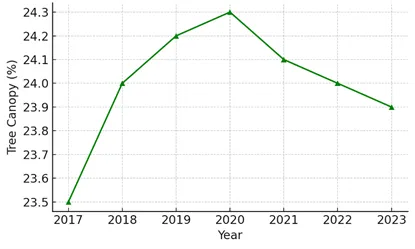
The canopy coverage surveys from the same period show that the City of New York’s efforts, such as MillionTreesNYC, was benefitting overall coverage from 2017-2020.[16] However, research suggests that the sharp decline can be credited to budget constraints, policy shifts, and competing priorities from events such as Hurricane Ida, COVID-19, and infrastructure.[17][18][19] Urban forestry projects have failed to equitably address Harlem and other such neighborhoods that are missing critical green infrastructure to tackle heat islands, air quality improvement, and enhancement of aesthetic and recreational qualities.[20] More current policy frameworks and mandates, such as the Urban Forest Management Plan of PlaNYC and Local Law 1065, seek to make improvements on these inequities.
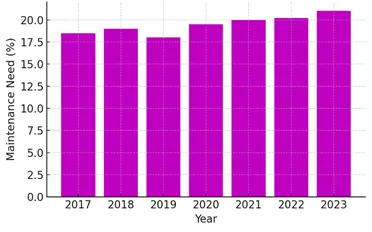
Housing maintenance needs remain as a major environmental justice concern; throughout the years assessed in the longitudinal analysis, Harlem neighborhoods remained in the 65th-90th percentile for having more than three reported maintenance issues throughout its units.[21] Poor housing conditions exacerbate residents' exposure to environmental threats such as mold, pests, and inadequate ventilation, further entrenching public health inequities. Despite ongoing housing interventions, the inequities in housing quality persist.
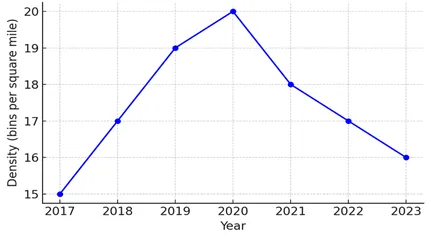
Trash bin density, a measure of solid waste management performance, has been improving citywide but shows a continuing inequity for Harlem. Despite the addition of receptacles citywide, Harlem still bears higher street waste levels, suggesting that infrastructural improvements may not be evenly distributed.
Recent statistics reveal that New York City generates approximately 14 million tons of waste annually, primarily transported by private garbage trucks. However, the placement of waste management facilities is not equitable, placing a heavier burden on certain neighborhoods.[22] For instance, the South Bronx contains 40% of the city's waste disposal, yet the population accounts for only 10% of the city.[23] Community protests, particularly in areas like Hunts Point, have led to important policy changes such as the 2018 Local Law 152, which reduced the capacity of waste disposal facilities in overburdened areas by 33%. This marked a significant turning point in the environmental justice movement in New York City, highlighting the essential role of community action in steering policy reform and emphasizing the government’s responsibility for equitable resource allocation and management.
4. Overview of New York City government’s EJ initiatives
New York City has established strategic plans to address EJ challenges, focusing on mitigating inequities faced by marginalized communities. These initiatives are guided by mandates arising from legislation like Local Law 60 which requires NYC agencies to identify and address EJ concerns and Local Law 64 which sets out a definition of EJ Areas and the Climate Mobilization Act, which sets ambitious emission reduction targets. The Mayor’s Office of Climate & Environmental Justice (MOCEJ) spearheads many of these efforts, coordinating across over 25 city government agencies to roll out initiatives under the reports PlaNYC and Power Up NYC.
PlaNYC, launched in 2007, embodies NYC’s vision of sustainability, incorporating goals such as reducing greenhouse gas emissions, improving air quality, and enhancing urban resilience. The fifth and latest iteration of the plan, i.e., PlaNYC: Getting Sustainability Done was issued in April 2023, focusing on advancing climate justice through decisive and prompt actions to lower the city’s impact on climate change and to protect its residents from the climate-related challenges they are currently facing.[24] The first PlaNYC was launched in 2007, followed by a significant update in 2015, which broadened its scope under the name OneNYC. The fourth version, released in 2017 and titled 1.5°C: Aligning New York City with the Paris Climate Agreement, made history as the first plan of any city government worldwide to align with the Paris Agreement.[25] The 2019 plan, OneNYC 2050, set forth long-term goals for the city’s climate strategies, including aims for building decarbonization, a ban on fossil gas in new constructions, and the establishment of commercial waste zones[26]. In addition to PlaNYC, MOCEJ also launched the PowerUp NYC initiative in 2022 to communicate the long-term energy transition plan for the city, focusing on decarbonizing electricity generation and distribution infrastructures as well as energy demand-side management in building and transportation sectors. Public-private partnerships are crucial to these initiatives, enabling collaboration between city agencies and private sector organizations to tackle environmental challenges effectively.
Access to Affordable, Safe and Sustainable Housing
Access to affordable, safe and sustainable housing is a core focus of NYC’s EJ efforts. Initiatives under PlaNYC include retrofitting public housing to phase out fossil fuel reliance and improving energy efficiency.[27] PowerUp expands these efforts with innovative clean energy and sustainable housing. For example, the NYC Solar Works program provides low-income homeowners in EJ communities access to renewable energy by 2025, significantly reducing energy costs while addressing climate vulnerabilities.[28] To that end, the city has implemented 25 solar photovoltaic (PV) projects with an installed capacity of 4.8 MW, bringing the total capacity to 24 MW on City-owned roofs alongside four new battery storage projects have been completed, with an installed capacity of 53 kW.[29]
Energy retrofits in affordable housing units have proven transformative by closing funding gaps, the city ensures better insulation, reduced emissions, and cost savings.[30] These efforts are essential in neighborhoods like Harlem, where residents face both economic challenges and high heat vulnerability. However, critiques highlight challenges in scaling these initiatives to meet the city’s ambitious goals while ensuring equitable distribution of benefits.
Tackling Climate Change
The NYC Carbon Challenge exemplifies the city’s private public partnerships to tackle climate change. Through voluntary commitments, over 100 organizations—including partners in Harlem—aim to decarbonize buildings and improve air quality.[31] Complementary initiatives like Local Law 97 of the Climate Mobilization Act mandate emission reductions, significantly contributing to the city’s climate targets.[32] Other efforts include creating resilience hubs citywide to help communities withstand climate-induced disruptions like extreme heat and flooding.[33]
Despite these successes, equity remains a concern; historical redlining has left communities like Harlem disproportionately exposed to climate risks, such as heat stress and flooding.[34] Initiatives like PlaNYC’s expansion of tree canopy coverage and PowerUp’s electrification of public infrastructure aim to address these disparities, but the pace of implementation and funding constraints have been criticized.[35]
Access to Resources
Enhancing access to sustainable resources is another pillar of NYC’s EJ strategy. PlaNYC prioritizes tree canopy expansion, greenways, and public transit to reduce heat vulnerability and promote health equity.[36] The PowerUp program seeks to electrify the school bus fleet and freight transport, reducing emissions and improving air quality.[37] Investments in solar energy and workforce development further ensure resource accessibility while creating economic opportunities in green sectors.[38]
The Bronx and Harlem, facing some of the city’s highest levels of food insecurity and air pollution, are direct beneficiaries of these initiatives.[39] Programs like the EJNYC Mapping Tool guide intervention, which can help ensure resources are allocated to the most vulnerable populations by exposing disparities. However, persistent challenges in equitable resource distribution highlight the need for more data-driven, community-focused approaches, which we will elaborate on in the Recommendations portion of this paper.
Measuring impact of EJ initiatives
NYC has implemented mechanisms to periodically report the progress of PlaNYC initiatives. Metrics like greenhouse gas emissions reductions, energy savings, and improved health outcomes help evaluate success. Given that the initiatives covered in this research, i.e., PlaNYC Getting Sustainability Done were introduced in 2023, their progress is still underway. NYC’s city government published the inaugural one-year progress report for PlaNYC Getting Sustainability Done in April 2024, detailing current progress and the next milestones to achieve the intended targets.
A key initiative under access to resources is the target achieving a 30% tree canopy cover. While the current percentage is not available, notable progress is being made. In September 2023, NYC Parks received USD15 million from the USDA Forest Service, which includes USD 5 million allocated for the Stewarding Canopy and Community initiative in underserved neighborhoods in Queens[40]. This initiative, in partnership with Trees New York, aims to plant new trees, preserve existing ones, and enhance community involvement through outreach efforts and green job training opportunities for both youth and adults.
One notable initiative is the goal of achieving a 30% citywide tree canopy cover. In Queens, the Stewarding Canopy and Community initiative, implemented in partnership with Trees New York, focuses on planting and preserving trees while providing workforce training opportunities for youth and adults. Additionally, the Clean Energy Program under Local Laws 24 and 99 highlights NYC’s commitment to installing 100 MW of solar photovoltaic systems on city-owned properties by 2030 and 150 MW by 2035. As of 2024, DCAS has completed 25.7 MW of installations and identified nearly 29 MW of additional rooftop solar potential.[41]
With regards to climate change, NYC Public Schools (NYCPS) has set a target to educate up to 1,000 teachers by 2026.[42] In this regard, NYCPS has been developing instructional resources aligned to core curricula and implementing a teacher-developed/teacher-led professional learning program “Building Community Resilience in a Changing Climate” for grade 3-12 teachers. NYCPS is also developing a series of training sessions for PreK-12 educators to support classroom instruction on climate justice.[43]
It is important to note while progress was reported across all initiatives, particularly on the funding support received from state and federal agencies, that the intended impacts of PlaNYC and Power Up in Harlem remain uncertain as the initiatives highlighted in the report did not cite any progress made in Harlem.
5. Environmental Justice Initiative in Other US Cities
A literature review was conducted to examine the strategies employed by various city governments to address environmental justice issues within their jurisdictions. The cities selected for this analysis were chosen based on their distinctive approaches to tackling these challenges, without considering factors such as population size, the proportion of residents classified as environmental justice (EJ) communities, the fiscal capacity of city governments, or the severity of environmental justice issues encountered by these communities. Additionally, comparative analyses focused on the initiatives of city governments concerning three identified themes: ensuring access to affordable housing, providing essential resources, and addressing climate action.
Key highlights from the literature review also intend to showcase the real-life applications of community-based participation in tackling environmental justice issues. The place-based approach prioritizes community-led solutions by centering resident voices and knowledge to address unique environmental and social challenges faced by the affected communities, therefore fostering collaboration in achieving outcomes deemed as equitable by the communities.
San Francisco
The San Francisco Planning Department defines environmental justice as ensuring equitable distribution of environmental benefits and the elimination of burdens, thereby promoting healthy communities where all residents can thrive. Central to San Francisco’s Environmental Justice initiative is the recognition of historical injustices that have disproportionately impacted communities of color and low-income neighborhoods. San Francisco city government has identified 22 EJ communities, predominantly located in the southern and eastern sectors of the city, including neighborhoods such as Bayview Hunters Point and the Tenderloin. The San Francisco Environmental Justice Framework, adopted in 2023 by the City Planning Commission, delineates a comprehensive set of visions and priorities that serve to advance environmental justice. This framework encompasses several critical domains which make up the key pillars of SF EJ action plan: (1) healthy and resilient environments, (2) physical activity and healthy public facilities, (3) healthy food access, (4) safe and affordable housing, (5) equitable and green jobs, and (6) empowered neighborhoods[44].
Access to safe and healthy housing is central to San Francisco’s Environmental Justice Framework (SF EJ framework), with key initiatives aimed at improving living conditions in underserved neighborhoods. The healthy housing initiative addresses environmental hazards like lead and mold, while the inclusionary housing policy ensures a percentage of new developments are affordable for low-income families. The Housing Stabilization Program aids vulnerable populations in maintaining stable housing to prevent homelessness amidst high living costs. The city’s climate action efforts focus on decarbonizing buildings, transitioning from gas appliances to reduce emissions, supported by the Climate Equity Hub[45]. Programs like the heat pump water heater initiative provide financial assistance for energy-efficient technologies, prioritizing the needs of disadvantaged communities.
With regards to access to resources, the empowered neighborhoods pillar is a distinct feature in SF EJ framework that highlights the city’s commitment to fostering active participation from community members in the policy-making process, facilitating a more inclusive and collaborative approach to environmental justice. Prior to the introduction of 2023 Environmental Justice Framework, San Francisco city government has been supporting local communities in socioeconomically disadvantaged areas to tackle environmental justice issues plaguing the community. The Environmental Justice Grant Program by the SF Environment department (SFE) has facilitated mobilization of initiatives of dozens of community-based organizations in the city, including PODER and Literacy for Environmental Justice. Grant funds have been used for a range of environmental justice projects including workforce development programs, solar photovoltaic installations on community-serving facilities, and the establishment of community gardens. Over USD 13 million has been allocated to community-based organizations since its inception in the early 2000s. Recently, the SFE has been awarded USD 1 million grant from the United States Environmental Protection Agency’s (EPA) Government-to-Government (EJG2G) program to support the City’s environmental justice work based on its proposal, which mapped out a process for ensuring equitable distribution of the benefits of climate action[46]. SFE will use the funds from the G2G grant to advance its EJ work by convening EJ communities to identify solutions and priorities specific to their needs. This includes offering grants and incentives to community-based organizations and small businesses to implement climate justice projects, as well as leveraging insights from community-led efforts to inform and shape the implementation of San Francisco Environmental Justice Framework.
Philadelphia
The Philadelphia Office of Sustainability (OOS) defines environmental justice as the fair distribution of environmental benefits such as affordable utilities, transit, and green spaces, and burdens like pollution, waste, and hazards, the rectification of past harmful environmental policies, as well as meaningful engagement of residents in decision-making processes, especially those historically marginalized communities[47].
The emphasis on meaningful engagement led the OOS to adopt a place-based approach in addressing environmental justice issues in one of its jurisdictions, Eastwick. Eastwick is a historically marginalized neighborhood in southwest Philadelphia and its vulnerabilities stem from decades of industrial pollutions, which include a legacy of burdens from a Superfund site, a former refinery, major transportation routes, and compounded by systemic racism, which has led to disinvestment and limited access to vital resources and infrastructure. The community faces recurring flooding with increasing severity arising from climate change, resulting in property damage and displacement.
The place-based initiative organized by Philadelphia OOS entails collaborative efforts involving a diverse array of stakeholders, including Eastwick residents, community-based organizations (CBOs), federal agencies like FEMA and the EPA, academic institutions, philanthropic organizations, and private consulting firms. A key aspect is empowering residents to lead the process; a committee of 11 residents from diverse backgrounds and organizations in Eastwick has been established to provide guidance on flood resilience strategies. The OOS also employed various engagement methods, including quarterly town halls, in-person information sessions with presentations from six agencies, library chats and small group discussions co-hosted by four agencies[48]. The residents’ feedback shaped the project's focus and direction, ensuring that solutions align with the residents’ concerns and priorities. Preliminary engagement began before the official project launch in 2022. A resident-led steering committee contributes valuable local insights, while CBOs provide essential expertise and build trust within the community. Government agencies, particularly the Philadelphia Office of Emergency Management, and federal agencies such as Federal Emergency Management Agency (FEMA) and EPA facilitated resource allocation and provided funding and technical assistance for CBOs to enhance their capacity to address community challenges. For instance, FEMA constructed a flood map in Eastwick while the Philadelphia Water Department and the U.S. Army Corps of Engineers conducted a feasibility study on solutions that can mitigate flooding in neighborhoods that are historically prone to riverine flooding. Meanwhile, academic institutions support research and analysis, and philanthropic organizations and private firms provide additional financial resources and specialized skills.
The collaboration led to ongoing development of a community-driven, long-term flood resilience strategy for Eastwick. While long-term solutions are being evaluated, and with support from FEMA and PEMA, OOS has been committed to pursuing funding sources to design and build interim flood barriers that bring relief to residents and properties in the nearer term which will commence in spring 2025.[49]
Chicago
The place-based approach to tackling environmental justice is a city-wide initiative in Chicago. The City of Chicago's Environmental Justice Action Plan 2023 is a key output from the place-based approach aiming to address environmental justice issues that arise from long-standing issues of environmental racism in the Southeast Side. Historically, polluting industries have been allowed to operate near homes, schools, and parks, creating “sacrifice zones” reek with pollution that disproportionately affect marginalized communities in the Southeast Side. In October 2020, the proposed relocation of the General Iron heavy industrial facility to the Southeast Side prompted three environmental justice organizations to file a civil rights complaint to the US Department of Housing and Urban Development (HUD)[50]. The settlement from the civil rights complaint became the impetus for the City’s environmental justice efforts as the city government was required to undertake remedial measures and implement reforms on existing policies that perpetuate environmental justice and racial equity issues in Chicago.
A Cumulative Impact Assessment (CIA) was conducted by the city government and the community leaders with the aim of guiding the revamping of multiple environmental justice policies[51]. This assessment is further shaped by the Environmental Equity Working Group (EEWG) and the Communications and Engagement Working Group (CEWG), which include community representatives and environmental advocates from organizations like People for Community Recovery (PCR) and Neighbors for Environmental Justice (N4EJ).
The CIA adopts a place-based approach that evaluates the cumulative impacts on communities rather than relying solely on generalized pollution statistics; hyperlocal data collection was conducted, particularly regarding air quality monitoring in specific neighborhoods. This meticulous approach to data collection enabled more targeted interventions and ensured effective resource allocation while tackling the cumulative burden of environmental stressors in historically marginalized areas. Resulting policy recommendations are tailored to the specific needs of these communities, including updates to zoning regulations, improvements in the permitting process, and enhanced enforcement mechanisms.
Findings and recommendations from the CIA were used as inputs for the city government’s environmental justice working group in developing the Chicago Environmental Justice Action Plan (“EJ Action Plan”). The EJ action plan entails recommendations in seven key areas: (1) improve data collection, reporting, and transparency, (2) reduce transportation impacts, (3) strengthen business regulation and enforcement (permit), (4) expand community involvement in decision making, (5) increase benefits for EJ communities, (6) change where and how development happens (zoning), and (7) implement additional pollution mitigations[52]. The EJ Action Plan also has provisions for ongoing community engagement through dialogue, feedback, and collaboration in implementing and refining proposed policies.
6. Recommendations for NYC city government to deepen its approach to addressing environmental justice issues
The literature review and comparative analyses on environmental justice initiatives by US city governments suggests that the NYC city government has been at the forefront in organizing and developing structured frameworks and programs to tackle EJ issues in its neighborhoods. This is reflected through the extensive action plans stipulated in PlaNYC and Power Up NYC. Nonetheless, the outcome of this research found that the community-driven approach has yet to take root in the NYC city government’s EJ programs and initiatives. This observation was made following comparison of NYC city government EJ initiatives and approach against case studies in San Francisco, Philadelphia, and Chicago which illustrate alternative approaches to addressing environmental justice issues, focusing on tackling pertinent EJ issues deemed as important by disadvantaged communities. There was no evidence of the NYC city government pursuing similar community-driven EJ initiatives in Harlem as well as other disadvantaged communities in New York City.
The place-based approach implemented by Philadelphia and Chicago city governments enabled identification of problem statements and formulation of recommendations for actions to be undertaken by city governments based on deeper and continuous engagement with disadvantaged communities. Such an approach can be replicated in NYC’s disadvantaged communities not only to ensure that pressing environmental justice issues faced by the communities are addressed but the approach also enables the NYC city government to run a pulse check on the actual impact of existing initiatives rolled out via PlaNYC and Power Up NYC to the communities. In implementing the place-based approach, NYC city government may also consider facilitating easier access to resources by disadvantaged communities, particularly by establishing funding support for CBOs that intend to address specific aspects of environmental justice issues faced by the community members. For instance, the NYC city government may consider allocating more city funding to the Climate Strong Communities program, instead of relying on sporadic grants from state and federal agencies to ensure continued focus and engagement with disadvantaged communities.
In addition to adopting a community-driven approach, the literature review on the progress of PlaNYC: Getting Sustainability Done along with assessments of environmental justice initiatives across various US cities underscores a critical gap in impact measurement. While many initiatives have been thoroughly documented, there is a considerable lack of quantitative outcomes and measurable impact assessments. This deficiency, particularly at the neighborhood level, as exemplified by Harlem, hinders a thorough analysis of the success (or the lack of it) as well as identification of challenges regarding New York City's existing environmental justice initiatives. Furthermore, it is crucial to establish impact measurement that also assesses the quality of life of targeted communities is crucial for building a narrative around how the quality of life of New Yorkers, especially in disadvantaged communities, has progressed over time. These indicators should incorporate health outcomes, access to essential services, and economic well-being, such as monitoring changes in asthma rates and tracking participation levels in local decision-making processes. Integrating qualitative assessments will enrich our understanding of community perspectives, allowing residents to share their views on quality of life improvements stemming from these initiatives.
In this regard, it is essential not only to establish robust metrics but also to develop tools and frameworks that facilitate the collection and dissemination of impact data in a manner that reflect the experiences and needs of the targeted communities. When impact measurement is done properly, the insights from the data collected can further refine existing tools used by the city government, such as the NYC Environmental Justice Mapping Tool, enabling more targeted interventions as well as analyses that make a strong case for the city's own funding allocation in the future. This approach not only enhances the city’s ability to respond to community needs but also strengthens the rationale for future investments in environmental justice, ultimately benefiting both the communities involved and the city's overall mission of promoting equity and sustainability. Implementing such measures would empower city governments and other stakeholders (i.e., consultants, researchers, etc.) to effectively evaluate the efficacy of environmental justice initiatives and inform the design of more targeted interventions. Suggested metrics could include the number of new community gardens, percentage change in the number of hospital visits, number of community solar participants, and additional square footage of tree canopy[53]. By integrating these metrics into their evaluation processes, city governments can gain valuable insights into the outcomes of their efforts and enhance the overall effectiveness of their environmental justice initiatives.
In enhancing its impact measurement, the NYC city government can leverage various resources available to them. One prominent organization is International Council for Local Environmental Initiatives (ICLEI), a global network of local and regional governments working towards tackling sustainability challenges and promoting sustainable urban development. ICLEI provides a range of standards, tools, and programs designed to support cities in measuring and improving their sustainability efforts. Among the resources provided by ICLEI is the Equitable Transition Handbook, which presents a methodology for mapping the social equity outcomes of local sustainability plans across three key dimensions: access, participation, and opportunity. Drawing on insights from the ICLEI network and the Urban Transitions Alliance, a global network of industrial legacy cities committed to inclusive urban transitions, the handbook identifies tools and recommendations for action, along with indicators across the three aforementioned dimensions for cities to monitor the progress of their action plans and/or programs. This handbook can be a potential source for reference for the NYC city government to develop effective impact measurement strategies that ensure equitable outcomes for across all city communities.
7. Conclusion and recommendation for future studies
Environmental justice is a complex issue that has disproportionately impacted the lives and livelihoods of low-income communities and people of color. This research indicates that there has been an intensified focus on addressing environmental justice issues at the city, state, and federal levels through various regulations, policies, and initiatives established in the past decade. Among US city governments, NYC is at the forefront of these environmental justice initiatives, having launched several programs aimed at assisting disadvantaged communities since the mid-2000s. However, the literature review exercise on NYC city government’s publicly available resources tended not to highlight or focus on impacts and outcome of the initiatives towards specific EJ Areas, including those in Harlem. Measuring and tracking of impacts of environmental justice initiatives also seem to be lacking in other US city governments, including those showcased in the preceding sections of this paper. Notwithstanding, the literature review yields insights into recent approaches adopted by other US city governments in addressing environmental justice and provides opportunities for the New York City government to enhance its implementation of existing and future initiatives while deepening engagements with disadvantaged communities in the cities.
A key recommendation for future studies is to address the challenges associated with obtaining data on the impacts of the city's environmental justice initiatives. Given the scarcity of publicly available data, future research should aim to identify and establish metrics that represent the progress and outcomes of these initiatives. Additionally, designing and disseminating public sentiment surveys could provide essential community feedback on the effectiveness of these programs. This dual top-down and bottom-up data collection approach can complement the existing information tracked by city governments, which often focuses on the amount of funding received from state or federal agencies. Moreover, juxtaposing such community feedback with funding data could enable city governments to assess the need for more targeted interventions. In some cases, a place-based approach may yield more effective outcomes that specifically meet the needs of disadvantaged communities.
[1]NYC Mayor’s Office of Sustainability. (n.d.). Environmental Justice. NYC Climate. Retrieved December 17, 2024, from https://climate.cityofnewyork.us/topic/environmental-justice/
[2]Internet Encyclopedia of Philosophy. (n.d.). Environmental Justice. Retrieved December 17, 2024, from https://iep.utm.edu/enviro-j/
[3]University of Michigan. (n.d.). Origins of Environmentalism. Michigan in the World: The University of Michigan's Bicentennial. Retrieved December 17, 2024, from https://michiganintheworld.history.lsa.umich.edu/environmentalism/exhibits/show/main_exhibit/origins
[4] Segregated by Design. (n.d.). Segregated by design. Retrieved December 17, 2024, from https://www.segregatedbydesign.com/
[5] Zhang, Y., & Smith, J. A. (2023). Urban green spaces and their impact on air quality: A meta-analysis. Environmental Research, 215, 114165. https://doi.org/10.1016/j.envres.2023.114165
[6] Huang, G., & London, J. K. (2020). Cumulative environmental vulnerability and environmental justice in California’s San Joaquin Valley. Environmental Justice, 13(2), 35–44. https://doi.org/10.1089/env.2020.0011
[7] Baker, S. H. (2016). Anti-resilience: A roadmap for transformational justice within the energy system. Social Justice, 43(4), 68–90. https://doi.org/10.1080/10455752.2016.1213013
[8] Bullard, R. D. (2005). The quest for environmental justice: Human rights and the politics of pollution. Sierra Club Books. https://www.jstor.org/stable/j.ctt9qghp5
[9] City of New York. (n.d.). Environmental justice. NYC Mayor’s Office of Sustainability. Retrieved December 17, 2024, from https://climate.cityofnewyork.us/topic/environmental-justice/
[10]Segregated by Design. (n.d.). Segregated by design. Retrieved December 17, 2024, from https://www.segregatedbydesign.com/
[11] NYC Mayor’s Office of Sustainability. (n.d.). Environmental justice. NYC Climate. Retrieved December 17, 2024, from https://climate.cityofnewyork.us/topic/environmental-justice/
[12]Esri. (n.d.). Data Explorer: NYC environmental justice. ArcGIS. Retrieved December 17, 2024, from https://experience.arcgis.com/experience/6a3da7b920f248af961554bdf01d668b/page/Data-Explorer/
[13] U.S. Environmental Protection Agency. (n.d.). Progress in cleaning the air and improving people's health. https://www.epa.gov/clean-air-act-overview/progress-cleaning-air-and-improving-peoples-health
[14] Frontiers in Public Health. (2024). Title of the article. Frontiers in Public Health. Retrieved December 17, 2024, from https://www.frontiersin.org/journals/public-health/articles/10.3389/fpubh.2024.1474534/full
[15] New York City Department of Health and Mental Hygiene. (n.d.). NYCCAS Air Pollution Rasters. NYC Open Data. Retrieved December 17, 2024, from https://data.cityofnewyork.us/Environment/NYCCAS-Air-Pollution-Rasters/q68s-8qxv/about_data
[16] Transformative Urban Mobility Initiative. (n.d.). NYC urban air quality assessment & urban forest analysis. Transform Transport. Retrieved December 17, 2024, from https://transformtransport.org/research/livable-streets/nyc-urban-air-quality-assessment-urban-forest-analysis/
[17] Campbell, L. K., Svendsen, E. S., Sonti, N. F., & Johnson, M. L. (2014). A social assessment of urban parkland: An exploration of ecology, community, and culture. USDA Forest Service. Retrieved December 17, 2024, from https://www.fs.usda.gov/nrs/pubs/jrnl/2014/nrs_2014_campbell-MTNYC_Research.pdf
[18] New York City Mayor’s Office of Sustainability. (n.d.). Environmental justice for all report scope. Retrieved December 17, 2024, from https://www.nyc.gov/assets/sustainability/downloads/pdf/EJ-Report-Scope.pdf
[19] New York City Independent Budget Office. (n.d.). Publications: Annual reports. https://www.ibo.nyc.ny.us/publicationsAnnuals.html
[20] City of New York Mayor’s Office of Sustainability. (n.d.). Environmental justice for all report scope. Retrieved December 17, 2024, from https://www.nyc.gov/assets/sustainability/downloads/pdf/EJ-Report-Scope.pdf
[21] Esri. Environmental Justice Data Explorer. New York City Environmental Justice Mapping Tool, https://experience.arcgis.com/experience/6a3da7b920f248af961554bdf01d668b/page/Data-Explorer.
[22] Office of the Mayor of New York City. (2021, February 17). Recovery for all of us: Mayor de Blasio launches first-ever NYC Environmental Justice for All report. Retrieved December 17, 2024, from https://www.nyc.gov/office-of-the-mayor/news/096-21/recovery-all-us-mayor-de-blasio-launches-first-ever-nyc-environmental-justice-all-report
[23] New York City Environmental Justice Alliance (NYC-EJA). (n.d.). Waste equity. Retrieved December 17, 2024, from https://nyc-eja.org/campaigns/waste-equity/
[24] City of New York. (2024). PlaNYC: Getting sustainability done. Mayor's Office of Climate and Environmental Justice. https://climate.cityofnewyork.us/initiatives/planyc-getting-sustainability-done/
[25] City of New York. (2017, October 3). NYC delivers first-ever city plan to meet the goals of the Paris Climate Agreement. https://www.nyc.gov/office-of-the-mayor/news/634-17/nyc-delivers-first-ever-city-plan-meet-goals-the-paris-climate-agreement
[26] C40 Knowledge Hub. (2023, April). PlaNYC: Getting sustainability done. https://www.c40knowledgehub.org/s/article/PlaNYC-Getting-Sustainability-Done?language=en_US
[27] PlaNYC: Getting sustainability done, 2024.
[28] Ibid.
[29] Ibid.
[30] New York State Energy Research and Development Authority. (2024). RetrofitNY Program. NYSERDA. Retrieved June 16, 2024, from https://www.nyserda.ny.gov/All-Programs/RetrofitNY-Program
[31] Mayor's Office of Climate & Environmental Justice. NYC Carbon Challenge. (2024). City of New York. https://climate.cityofnewyork.us/initiatives/nyc-carbon-challenge/
[32] City of New York. (2024). Buildings. Retrieved December 16, 2024, from https://climate.cityofnewyork.us/subtopics/buildings/#:~:text=At%20the%20core%20of%20the%20CMA%20is,stricter%20limits%20coming%20into%20effect%20in%202030.
[33] City of New York. (2024). AdaptNYC. Mayor’s Office of Climate & Environmental Justice. https://climate.cityofnewyork.us/initiatives/adaptnyc/
[34] New York State Climate Impacts Assessment. (2024). Housing policy, climate change, and health. https://nysclimateimpacts.org/explore-the-assessment/case-studies/housing-policy-and-health/
[35] PlaNYC: Getting sustainability done, 2024.
[36] Ibid.
[37] PowerUp NYC Transportation Electrification: Catalyzing a Rapid Electrification of School Buses. (September 2023). NYC Mayor’s Office of Climate & Environmental Justice. https://climate.cityofnewyork.us/wp-content/uploads/2023/09/PowerUp_ResearchandFindings-Memo_School-Bus-Electrification.pdf
[38] Macknick, J., Beatty, B., & Hill, G. (2013). Overview of opportunities for co-location of solar energy technologies and vegetation.. https://doi.org/10.2172/1115798
[39] Kennedy, B. E., Gallanter, M. M., Brown, N. R., Leung, M. M., & Platkin, C. (2024). Food purchasing behavior of predominantly minority families in an urban supermarket voucher pilot program. Journal of Public Health Management &Amp; Practice, 30(4), 526-534. https://doi.org/10.1097/phh.0000000000001871\
[40] The City of New York. (2024, April). Getting sustainability done: 2024 progress report PlaNYC. Mayor's Office of Climate and Environmental Justice. https://climate.cityofnewyork.us/wp-content/uploads/2024/04/PlaNYC-2024-Progress-Report.pdf
[41] New York City Department of Citywide Administrative Services. (2024). Clean energy generation. NYC.gov. https://www.nyc.gov/site/dcas/agencies/clean-energy-generation.page
[42] The City of New York. (2024, April). Getting sustainability done: 2024 progress report PlaNYC. Mayor's Office of Climate and Environmental Justice. https://climate.cityofnewyork.us/wp-content/uploads/2024/04/PlaNYC-2024-Progress-Report.pdf
[43] The City of New York. (2024, April). Getting sustainability done: 2024 progress report PlaNYC. Mayor's Office of Climate and Environmental Justice. https://climate.cityofnewyork.us/wp-content/uploads/2024/04/PlaNYC-2024-Progress-Report.pdf
[44] San Francisco Planning Department. (n.d.). Environmental justice framework and general plan policies. https://sfplanning.org/project/environmental-justice-framework-and-general-plan-policies
[45] Bay Area Regional Energy Network. (2023, March 27). San Francisco launches climate equity hub to support environmental justice communities. https://www.bayren.org/news/san-francisco-launches-climate-equity-hub-support-environmental-justice-communities
[46] San Francisco Department of the Environment. (2023, September 12). San Francisco wins $1 million EPA award to support community-led climate action. https://www.sfenvironment.org/press/san-francisco-wins-1-million-epa-award-support-community-led-climate-action
[47] City of Philadelphia. (2024). Eastwick: From Recovery to Resilience A Place-based Framework for Environmental Justice and Climate Resilience. https://www.phila.gov/media/20240904105131/OOS-Place-Based-Framework-final.pdf
[48] City of Philadelphia. (2024). Eastwick: From Recovery to Resilience A Place-based Framework for Environmental Justice and Climate Resilience https://www.phila.gov/media/20240904105131/OOS-Place-Based-Framework-final.pdf
[49] City of Philadelphia. (2024, October 8). An interim solution to flooding in Eastwick: Learn about the near-term flood barrier project. https://www.phila.gov/2024-10-08-an-interim-solution-to-flooding-in-eastwick-learn-about-the-near-term-flood-barrier-project/#:~:text=What%20is%20the%20Eastwick%20Near,the%20Cobbs%20and%20Darby%20Creeks.
[50] Ramirez, G. (2023, September 18). Chicago’s historic environmental justice HUD settlement. Natural Resources Defense Council. https://www.nrdc.org/bio/gina-ramirez/chicagos-historic-environmental-justice-hud-settlement
[51] Chicago Department of Public Health. (2023, September 17). Cumulative impact: Executive summary. https://www.chicago.gov/content/dam/city/depts/cdph/environment/CumulativeImpact/oct-update/CIA_ExecutiveSummary_9.17.23_v3.pdf
[52] Chicago Department of Public Health. (2023, September 19). 2023 EJ action plan. https://www.chicago.gov/content/dam/city/depts/cdph/environment/CumulativeImpact/2023-EJ-Action-Plan-9.19.pdf
[53] Jessee, T. (2024, October 18). 143 local government KPIs & scorecard measures. ClearPoint Strategy. https://www.clearpointstrategy.com/blog/143-local-government-kpis-scorecard-measures#:~:text=A%20government%20key%20performance%20indicator,number%20of%20new%20jobs%20created
About the Authors
DeAundr’e Newsome is a graduate student in Sustainability Management with a background in Agribusiness. His academic and professional experience spans both the nonprofit and private sectors, where he has led and contributed to projects at the intersection of environmental equity, food security, and community resilience. DeAundr’e is passionate about discovering strategies that support building sustainable communities, food systems, and economies, and seeks to gain more experience in that space.
Durga Sreenivasan is a Robertson Scholar at Duke University, awarded for her leadership in sustainable development and organizing. Her experience includes work for the NYC Mayor’s Office of Climate and Environmental Justice and the Manhattan Borough President’s Office, as well as for nonprofits such as Shanti Bhavan and The Bell. As winner of Thomas Hunter Memorial Award for outstanding graduate of Hunter College High School in NYC and a soon-to-be Duke grad (B.A., 2025), Durga now seeks to deepen her policy experience at home in NYC.
Nur Syairah Husna binti Mohd Ridzuan is a graduate student in Sustainability Management with a background in policymaking. As a climate policy strategist at the Central Bank of Malaysia, she focuses on climate risk management and sustainable finance initiatives. Her current research interests include climate justice, energy policy, and the development of equitable solutions for a low-carbon future.
Shixun Shangguan is pursuing an MA in Climate and Society at Columbia University. He has reported on ESG issues for Omni TV Canada and led biodiversity research in Costa Rica’s tropical rainforests. As the founder of an ESG consultancy, he achieved 100% LEED and WELL compliance for real estate projects and leverages R, Excel, and Adobe Premiere to drive data-informed sustainability solutions.
This article was written as part of the course Practicum on Practical Applications of Environmental Research. All rights belong to the authors. This paper was published with the authors' approval. The Research Program on Sustainability Policy and Management does not claim authorship or ownership of this content. All of the research, analysis, ideas, comments and insights presented in this article belong to the authors alone.